
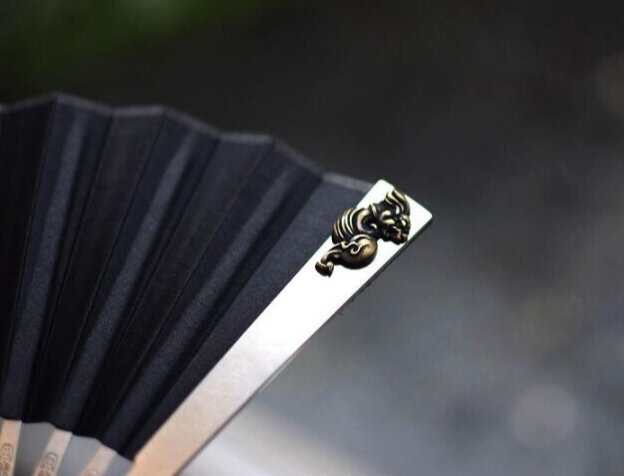
Watch the FEGVE titanium fan in action:
Watch the FEGVE titanium fan in action:
Watch the FEGVE titanium fan in action:
I want to be upfront: I’m not a collector. I buy things I actually use. And this titanium folding fan from FEGVE has lived in my right pocket for the past month — through heat, humidity, subway commutes, and a few awkward stares on the bus. Here’s what I actually think.
The One-Month Pocket Test
After 30 days of daily carry, the FEGVE titanium fan isn’t just surviving — it’s proving that “titanium + traditional craft” is a combo that actually works in the real world.
The weight is the first thing you’ll notice. TC4 Grade 5 titanium gives you a fan that’s roughly 45% lighter than a steel equivalent, but with enough heft to feel substantial. A 9-inch titanium fan runs about 65-85g depending on the surface material — lighter than your phone, heavier than a folding knife. The balance point sits right where your fingers naturally grip, so it doesn’t pitch forward or backward when you snap it open.
I’ve carried the Breeze (轻风) series and the Wendao (问道) variant. The Breeze is the workhorse — stonewash finish, carbon fiber surface, no-nonsense build. The Wendao is the statement piece with hand-engraved ribs and a distinctly more refined opening feel.
Opening Feel: The Elastic Feedback That Matters
Here’s where the titanium fan separates itself from bamboo and from cheap zinc alloy knockoffs. When you snap a titanium fan open, there’s a snappy but controlled elastic response — the ribs flex at the joint and then settle into position with a satisfying damping feel. Not rubbery, not loose. Exactly the right amount of tension.
The琴方 (qinfang) head variant has a subtle rolling mechanism on the pivot that takes some of the mechanical stress off the rivets during repeated open-close cycles. If you’re buying this fan as a fidget object first and a cooling tool second, the qinfang head is worth the upgrade.
The马牙 (horse tooth) head style is more traditional — no roll, just a clean mechanical pivot. The walk of the fan ribs during opening is tighter on this variant. If you prefer precision over smooth operation, this is your pick.
Surface Materials: Carbon Fiber vs Silk
The carbon fiber fan surface is where FEGVE’s engineering background really shows. At roughly 8-12g per panel, carbon fiber is lighter than silk and more durable than cotton. It doesn’t absorb moisture, doesn’t tear, and won’t delaminate if you accidentally fold it wrong. The tradeoff: it doesn’t have the acoustic quality of a traditional silk fan when you snap it shut.
Silk surfaces (cotton/polyester variants marketed as “silk”) look more traditional and have that classic shhhh sound when you close the fan. But they’re more fragile — I’ve seen a silk panel tear after the fan was sat on in a back pocket. If you’re buying primarily as an EDC fidget/pocket piece, go carbon fiber. If you’re performing or using it in traditional contexts, silk is the right call.
The Different Series: Breeze vs Wendao vs Qilin vs Dragon Scale
I’ve handled most of the FEGVE fan lineup at various points:
- Breeze (轻风): The entry point. Stonewash ribs, basic rivet construction, carbon fiber or cotton surface. If you want to try titanium fans without spending $150+, this is where you start. The fidget feel is good, not exceptional.
- Wendao (问道): The artisan tier. Hand-engraved ribs, brass or copper inlay options, premium head styles (qinfang翻轮, he shang tou, ma ya). The opening tension is tighter and more refined. Worth the premium if you appreciate craft.
- Qilin (麒麟): Collector’s grade. The brass kirin motif on the ribs is CNC-engraved and hand-finished. This fan is a conversation piece that happens to work. Beautiful, but the inlay adds weight.
- Dragon Scale (龙鳞): The meteorite crater texture series. FEGVE’s signature surface treatment — CNC-engraved crater pattern on the ribs, blued thermal oxide finish. This is the fan I reach for most often. The texture gives excellent grip, the blued finish hides scratches better than mirror polish, and the weight distribution is tuned for one-handed snap-open.
The “Temper” of Titanium: Break-in Notes
Every titanium fan has a break-in period. New out of the box, the fan ribs can feel slightly stiff — especially on the he shang tou (monk head) variant where the rounded top adds mechanical complexity. After about 50 open-close cycles, the tension settles into a comfortable range.
The locking mechanism uses a small nail/rivet at the pivot point. On a brand new fan, this can have a slight stiction — a tiny tug before it locks. After a week of carry, this smooths out. Just know that if you’re buying pre-owned or trying one in a store, “too stiff” might just mean “needs breaking in.”
Self-Defense? Let’s Be Real
I see this marketed constantly and I need to be honest: a titanium fan is not a weapon. It’s a 65-85g piece of pocket jewelry with some structural rigidity. What it can do: block a grab or deflect a hand, create a sharp snapping motion to break concentration, serve as a improvised barrier in a crowd.
What it cannot do: strike with meaningful force, withstand a dedicated grip attack, or replace actual self-defense training. If you’re buying this for “tactical” reasons, you’re in the wrong product category.
Should You Buy One? Scenario-Based Recommendations
Buy it if: You’re an EDC enthusiast who appreciates the intersection of traditional craft and modern materials. You want something that looks incredible, feels premium in hand, and sparks conversations.
Skip it if: You want the cheapest way to stay cool. You need something lightweight for summer hiking. You don’t care about materials or craftsmanship.
The sweet spot: Dragon Scale (meteorite crater) + carbon fiber surface +琴方 head. Around $120-150, 72g, excellent fidget feel, and looks distinctively FEGVE without going full collectible price territory.
Final Verdict
FEGVE didn’t just slap “titanium” on a traditional fan shape. The weight tuning, the elastic response of the rib joints, the surface texture options — this is a thoughtfully engineered product that happens to preserve traditional form factors. I’ve carried it every day for a month, and it hasn’t left my rotation.
That’s the best review I can give any EDC piece.
Related: The Modern Titanium Fan — a deeper look at the fan series lineup. Also see The FEGVE Brand Story for the story behind these products.