
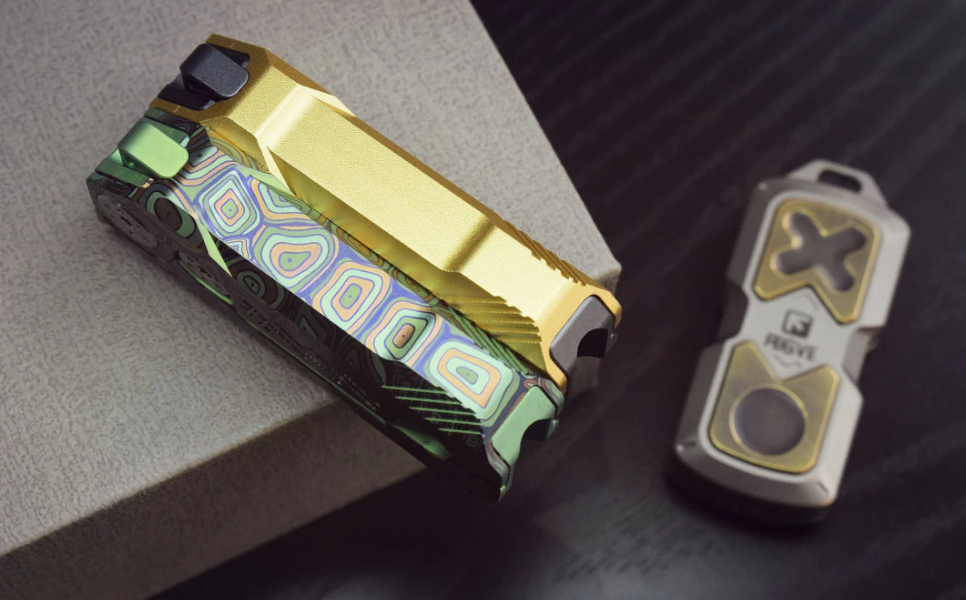
Collecting EDC tools walks a line between function and obsession. You don’t need a $200 titanium spinner. You definitely don’t need three of them in different finishes. But wanting them—understanding why they’re worth owning beyond pure utility—that’s the collector’s mindset. Let’s explore what makes titanium EDC pieces hold (and gain) value.
The Collector’s Psychology
EDC collecting differs from hoarding in one critical way: use. Collectors carry their pieces. The titanium keychain on your pocket has been touched 500 times this month. The spinner you’ve fidgeted with during 200 meetings has served its purpose while maintaining condition. This isn’t accumulation—it’s curated utility.
Why Titanium Specifically
Material Rarity
Titanium isn’t precious like gold, but it’s not common like aluminum either. The Kroll process required to extract titanium from ore is energy-intensive and complex. This creates natural price floors—titanium pieces cannot be produced as cheaply as steel alternatives.
Manufacturing Challenge
Titanium machines poorly. It work-hardens quickly, conducts heat poorly, and chews through cutting tools. Quality titanium products require skilled operators, appropriate tooling, and slower production speeds. This limits supply while maintaining quality requirements.
Biocompatibility
Titanium develops a passive oxide layer that’s inert to human biology. For items that contact skin constantly—keychains, watches, jewelry—this matters. No allergic reactions, no metal taste, no discoloration from sweat.
Value Appreciation Patterns
Limited Runs
FEGVE’s numbered limited editions appreciate when production runs end. A collector’s set of 100 numbered pieces becomes scarcer as individual collectors keep theirs. We’ve seen early limited spinner editions trade at 2-3x original retail within 2-3 years.
Discontinued Finishes
Surface treatment options come and go. A specific anodized color may never be reproduced identically due to batch variations in the electrochemical process. Collectors who identify discontinued finishes early benefit when supply dries up.
Manufacturing Evolution
FEGVE’s 2025 investment in five-axis CNC equipment represents a manufacturing step-change. Pieces produced with older equipment have historical value—marks of the evolution. Early CNC pieces from 2016-2017 carry different collector appeal than current production.
Building a Collection Strategy
Focus Categories
Don’t collect everything. Choose specific categories: spinner bearings, keychain mechanisms, or surface finishes. Focused collections are more coherent, easier to curate, and more impressive to knowledgeable viewers than scattered general accumulation.
Condition Preservation
Carry your pieces, but maintain them. Occasional cleaning, appropriate storage for backup pieces, careful handling—these preserve value. A pristine-in-box (MIB) piece and a well-carried piece both have value; they’re different markets.
Documentation
Keep records: purchase dates, original prices, production batch numbers if available, photos of significant pieces. Documentation matters when establishing provenance for valuable items.
Market Dynamics
EDC collecting remains niche compared to traditional collecting categories (watches, coins, stamps). This creates opportunities: less speculation, more genuine interest, community-driven pricing rather than market manipulation.
The global EDC community is growing, particularly in Western markets. As awareness grows, collector demand for quality pieces—particularly from established brands with manufacturing credibility—increases.
Honest Assessment
Not every titanium piece appreciates. Mass-produced items from established lines rarely gain significant value. The appreciation potential lies in:
- Limited production runs
- Significant manufacturing milestones
- Early production examples from brands that later scaled
- Unique materials (meteorite, Damascus steel inlays)
If you’re buying purely for potential appreciation, you’re speculating. If you’re buying because you want the piece, use it, enjoy it—and appreciate it if value increases—that’s collecting.
The Non-Financial Value
Ultimately, EDC collecting isn’t primarily about investment returns. It’s about:
- The satisfaction of holding precision engineering
- The tactile pleasure of well-executed mechanisms
- Belonging to a community of enthusiasts
- Personal expression through curated carry
These values don’t appear on spreadsheets. They’re why we keep collecting.
Related Reading:
• Titanium Keychains That Actually Last — Core collecting category
• Precision Fidget Spinners for Adults — Spinner collecting guide
Frequently Asked Questions
Q: Should I keep pieces in original packaging?
A: For investment purposes, yes. For daily carry purposes, no—use what you have. The “pristine” market and “well-carried” market serve different buyers with different priorities.
Q: How do I verify authenticity of limited pieces?
A: Purchase from authorized dealers or directly from FEGVE. Check for consistent machining quality, proper weight, authentic surface finishes. When in doubt, contact the manufacturer with serial number verification.
Q: Which FEGVE pieces have most appreciated?
A> Limited editions with numbered certificates, early production pieces from 2016-2017 spinner era, and discontinued surface finish variants show strongest appreciation. Specific data is limited since secondary markets aren’t formally tracked.